FEBRUARY 5, 2026
Decoding Derisking Expansion
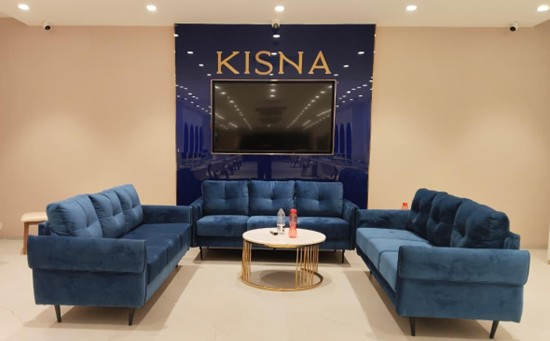
Turnkey
Fitout Execution done by Sparrow Shopfits
How to de-risk Retail Expansion When Every Store Opening Is a Make-or-Break Moment
Getting Retail Store Openings Right the First Time
If you are a retailer planning
to scale, you already know that expansion is not just a growth decision—it is a
risk decision. New stores rarely fail because the brand promise is weak or the
location choice is flawed. More often, they fail because execution breaks down
in the critical stretch between intent and opening day.
This article decodes derisking
expansion by unpacking the most common problems that derail retail store
openings and reframing them as solvable, system-level challenges. The objective
is simple: to help retailers move store rollouts away from uncertainty and
firefighting, toward predictability, control, and repeatable success.
The Delay Trap: Long and
Uncertain Opening Cycles
Most store openings take longer
than planned. Multiple vendors operating in silos, late-stage design changes,
on-site fabrication, and sequential handovers quietly stretch timelines. While
teams debate causes and responsibilities, the business absorbs the cost—rent
continues, staff costs rise, and marketing calendars slip.
The real cost of delay is not
inconvenience. It is lost revenue and lost momentum before the first customer
even walks in.
Solution: Derisking
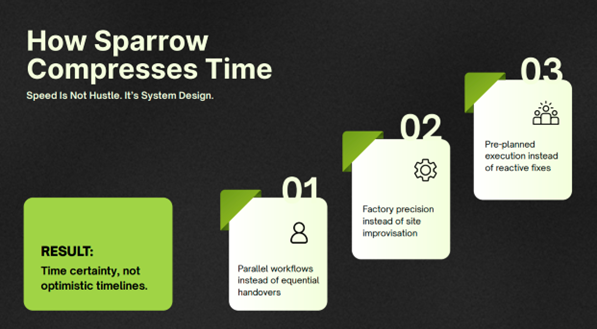
timelines starts with designing speed into the execution process itself.
Parallel workflows replace linear handovers. Fixtures are factory-finished
while site work progresses simultaneously. Execution sequencing is locked
early, reducing dependence on site improvisation. Speed becomes predictable
rather than aspirational—and opening dates become commitments, not estimates.
The Visibility Gap: No
Real-Time Execution Control
Leadership teams often discover
delays too late. Without live program tracking, risks remain invisible until
deadlines are already compromised. By then, decision-making becomes reactive
and firefighting replaces planning.
Solution: Live program
control brings discipline and transparency to execution. Weekly milestone
tracking compares plans against actuals, flags risks early, and assigns clear
ownership for resolution. Decisions are taken upstream, when corrective action
is still possible, rather than under pressure in the final weeks before
opening.
The Brand Erosion Problem:
Inconsistent Store Execution
As retail networks expand, brand
consistency often weakens. Materials vary, finishes change, fixtures are
substituted, and detailing gets compromised. Customers notice—even when
internal teams rationalise the deviations.
Brand dilution is rarely a
design problem. It is almost always an execution governance failure.
Solution: Governance
protects brand intent. Designs, BOQs, and materials are frozen early to prevent
last-minute ambiguity. Factory quality checks validate finishes, fittings, and
hardware before dispatch. On-site sign-offs ensure hidden works are verified
before closure, and handover happens only when the store is genuinely
store-ready. Consistency becomes a controlled outcome, not a matter of hope.
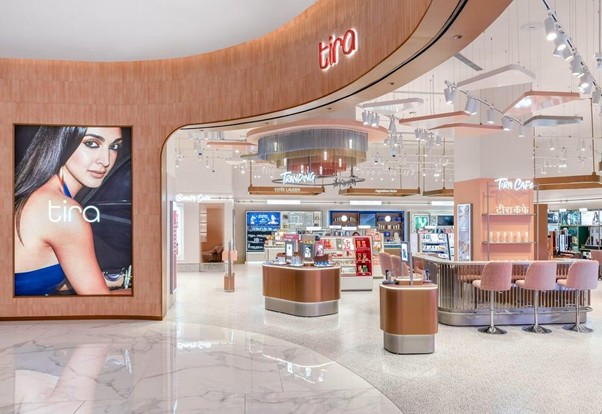
Project
Management Consultancy Services provided by Sparrow Shopfits
The First-Store Risk
First stores are frequently
underestimated. Without an internal rollout playbook, retailers depend on new
vendors, optimistic timelines, and heavy founder involvement in day-to-day
execution. Instead of becoming a scalable prototype, the first store turns into
a stress test.
Solution: First stores
demand structure, not heroics. Scope freezes, critical-path clarity, parallel
manufacturing, and documented handovers convert the first store into a
reference model for scale. The opening becomes a foundation for growth, not an
exception that cannot be repeated.
Conclusion
Retail expansion doesn’t fail
because ambition is high - it fails because execution risk is underestimated.
Derisking expansion starts by accepting that timelines, costs, and brand
consistency cannot be managed by intent alone; they need systems that make risk
visible and controllable.
Through years of delivering
first stores, flagships, and large-scale rollouts, Sparrow has identified where
execution repeatedly breaks down. Those insights have driven investments in
technology-led program management - tracking milestones in real time, comparing
plan versus actuals, flagging risks early, and assigning clear ownership before
issues escalate.
Combined with integrated
manufacturing and execution governance, this tech-enabled approach turns store
openings into predictable outcomes rather than hopeful deadlines. Getting it
right the first time is not luck- it is the result of disciplined systems
designed to remove uncertainty from retail expansion.
Founder’s Experience
Sparrow is a retail fit-out and execution specialist
focused on helping brands open stores faster, more consistently, and with
greater execution certainty. Founded by Bhaskar Arya—an architect and retail
execution leader with over two decades of experience—Sparrow brings together
design understanding, manufacturing capability, and on-ground project delivery
under a single, accountable system.
Over the years, Sparrow’s founder has delivered more than
1,100 retail stores across India, the Middle East, and the UK,
working with leading brands across fashion, lifestyle, electronics, and
F&B. He has executed millions of square feet of retail space,
including first stores, flagship formats, and large-scale rollouts.
A key differentiator is Sparrow’s investment in
technology-enabled execution. Its program management systems provide real-time
visibility into milestones, risks, and ownership, allowing teams and leadership
to track progress against plan and intervene early—before delays turn costly.
Combined with integrated manufacturing and rigorous quality governance, this
approach enables predictable, on-time, and on-brand store openings at scale.